

Lifting shoes are a popular training tool for strength athletes, weightlifters, powerlifters, and gym users who want a more stable base during certain lifts. Unlike standard trainers or running shoes, lifting shoes are designed to feel firm, supportive, and stable under load.
They are most commonly used for squats, Olympic weightlifting movements, and exercises where an upright torso and stable foot position are important. However, they are not always the best choice for every lift or every lifter.
This guide explains what lifting shoes do, how they differ from regular trainers, when to use them, when not to use them, and how to choose the right pair for your training.
What Are Lifting Shoes?
Lifting shoes are shoes designed specifically for weight training. They usually have a firm sole, a raised heel, strong upper support, and one or more straps to help keep the foot secure.
The main purpose of a lifting shoe is to provide a stable platform. Instead of compressing under load like many running shoes, a lifting shoe should feel solid when you push through the floor.
Most lifting shoes also include an elevated heel. This can help some lifters reach deeper positions in squats, cleans, snatches, and other movements that require ankle mobility and an upright torso.
Lifting Shoes Summary
| Feature | What It Does | Why It Matters |
|---|---|---|
| Raised heel | Elevates the heel compared with the forefoot. | Can make it easier to squat deeper and stay more upright. |
| Firm sole | Reduces compression under heavy loads. | Helps create a stable base for lifting. |
| Secure upper | Holds the foot in place during movement. | Reduces unwanted foot movement inside the shoe. |
| Strap or locking system | Adds extra midfoot security. | Helps the shoe feel tighter and more controlled during heavy lifts. |
| Wide stable base | Increases contact and stability through the floor. | Can improve confidence when squatting, catching, or driving through the legs. |
How Lifting Shoes Work
Lifting shoes work by changing the way your foot interacts with the floor. The firm sole helps reduce energy loss, while the raised heel changes your lower-body position during squats and other knee-dominant lifts.
When the heel is raised, many lifters find it easier to keep the torso upright and allow the knees to travel forward during squats. This can be especially useful for front squats, high-bar squats, cleans, and snatches.
Lifting shoes do not automatically improve technique. They are a tool. They can make certain positions easier to achieve, but they should still be used alongside good movement mechanics, mobility work, and consistent practice.
Lifting Shoes vs Regular Trainers
Regular trainers are usually designed for comfort, running, walking, or general gym use. Many have soft, cushioned soles that compress under load. This can feel comfortable for everyday movement, but less stable during heavy lifting.
Lifting shoes are designed to feel firm and secure. The goal is not softness. The goal is stability.
| Feature | Lifting Shoes | Regular Trainers |
|---|---|---|
| Sole | Firm and stable. | Often soft and cushioned. |
| Heel | Usually raised. | Varies, but often designed for comfort or running mechanics. |
| Stability | Designed for heavy lifting. | May feel unstable under heavy loads. |
| Best use | Squats, Olympic lifting, and strength work. | General training, walking, machines, warm-ups, and conditioning. |
| Compression | Minimal sole compression. | Often compresses more under load. |
When Should You Use Lifting Shoes?
Lifting shoes are most useful for exercises where stability, knee travel, and an upright torso are important.
Squats
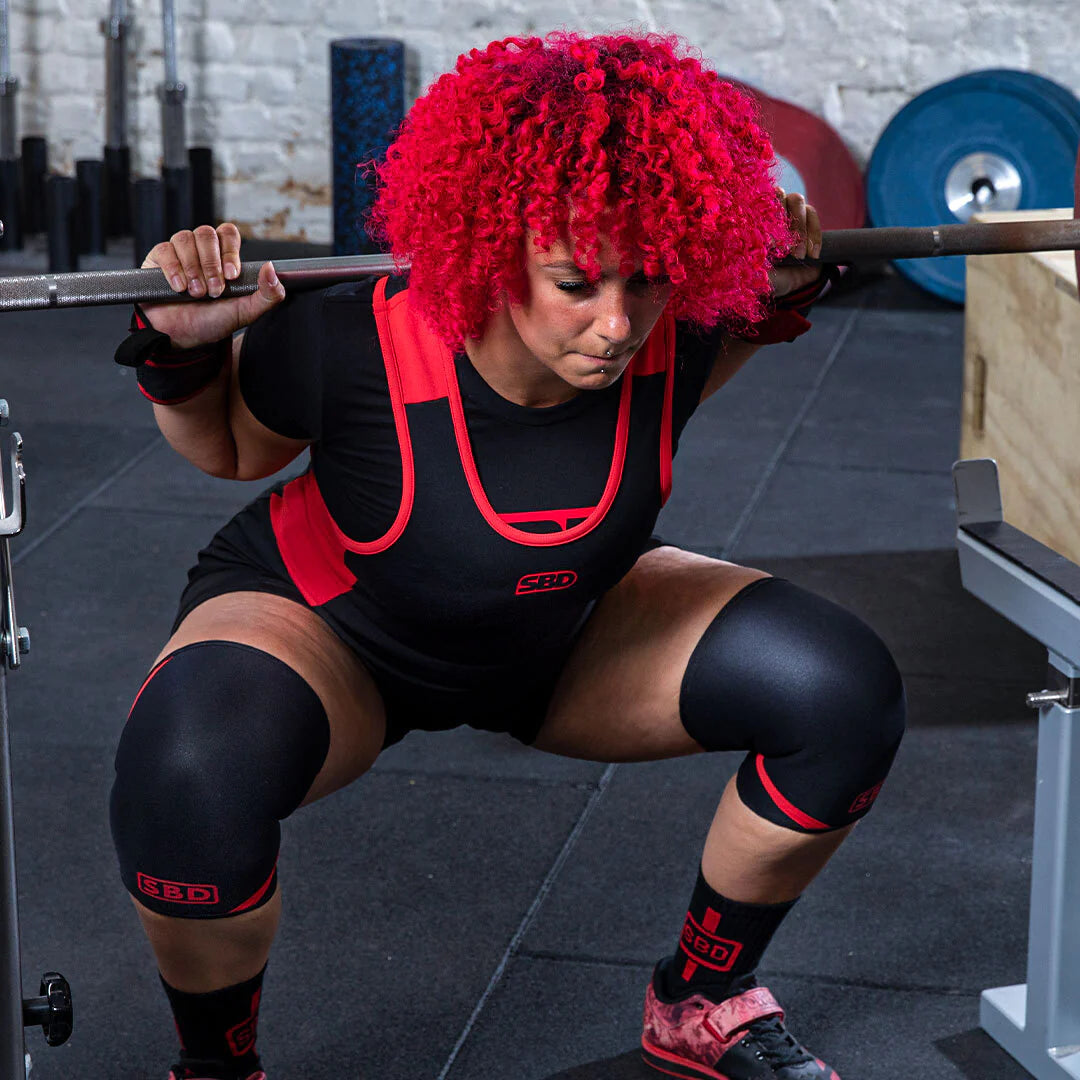
Squats are one of the most common reasons lifters use lifting shoes. A raised heel can help some people reach depth more comfortably, keep the torso more upright, and maintain a more stable foot position.
Lifting shoes are especially popular for high-bar squats and front squats. Some low-bar squatters also use them, while others prefer flat shoes depending on their stance, build, and lifting style.
Olympic Weightlifting
Lifting shoes are widely used for Olympic-style lifts such as the snatch and clean and jerk. These movements require speed, stability, and the ability to receive the bar in deep positions.
The raised heel can help lifters stay upright in the catch position, while the firm sole provides a stable base during the pull, catch, and recovery.
Leg Press and Hack Squat
Some lifters also use lifting shoes for machine-based lower-body exercises such as leg press, hack squat, and pendulum squat. The raised heel can make it easier to achieve a comfortable knee-forward position.
Accessory Lower-Body Work
Exercises such as split squats, lunges, and goblet squats may feel better in lifting shoes for some lifters, especially when the goal is to keep the torso upright and emphasise the quads.
When Should You Avoid Lifting Shoes?
Lifting shoes are useful, but they are not ideal for every exercise.
Conventional Deadlifts
Many lifters prefer flat shoes or deadlift slippers for conventional deadlifts. A raised heel increases the distance from the floor slightly and may shift the body into a position that some lifters find less efficient.
That said, some lifters still deadlift well in lifting shoes. The best choice depends on your anatomy, pulling style, and comfort.
Sumo Deadlifts
Sumo deadlifters often prefer a flat, thin-soled shoe that allows them to stay close to the floor and push the feet out against the ground. Lifting shoes may feel less suitable if the raised heel affects balance or positioning.
Running and Conditioning
Lifting shoes are not designed for running, jumping, or long conditioning sessions. Their firm soles and raised heels are useful for lifting, but they are not ideal for impact, speed, or endurance work.
General Everyday Wear
Lifting shoes are best saved for training. Wearing them casually can reduce their lifespan and may not feel comfortable for walking or standing for long periods.
Choosing the Right Lifting Shoes
The best lifting shoe depends on your training style, foot shape, mobility, and personal preference. There is no single perfect shoe for every lifter.
Heel Height
Heel height is one of the biggest differences between lifting shoes. A higher heel can make it easier to squat with a more upright torso, while a lower heel may feel more natural for lifters who already have good ankle mobility or prefer a less aggressive position.
Lifters with longer femurs, limited ankle mobility, or a very upright squat style may prefer a higher heel. Lifters with shorter femurs, excellent ankle mobility, or a wider squat stance may prefer a lower heel.
Sole Firmness
A lifting shoe should have a firm sole that does not collapse under heavy weight. This helps transfer force into the floor and gives you a more stable base.
Avoid shoes that feel too soft, squishy, or unstable when squatting. Cushioning may feel comfortable, but it is not usually helpful under a heavy barbell.
Fit and Foot Shape
Lifting shoes should feel snug, especially around the midfoot and heel. Your foot should not slide forward, sideways, or lift out of the shoe during training.
However, they should not be painfully tight. Your toes should have enough room to sit naturally, and the shoe should not create sharp pressure points.
Straps and Fastening
Most lifting shoes use laces combined with one or more straps. The laces provide general fit, while the strap helps lock the foot in place.
Some shoes use one strap, while others use two. More straps can create a more secure feel, but may also add bulk or stiffness. The right choice depends on how much lockdown you prefer.
Weight and Flexibility
Some lifting shoes feel very rigid and heavy, while others are lighter and more flexible. A more rigid shoe may feel better for heavy squats and weightlifting, while a lighter shoe may feel more comfortable for mixed training.
Lifting Shoe Fit Guide
| Fit Area | What You Want | Warning Signs |
|---|---|---|
| Heel | Secure with minimal lifting inside the shoe. | Your heel slips when squatting, walking, or catching a lift. |
| Midfoot | Snug and locked in without painful pressure. | Your foot slides side to side or the shoe feels overly narrow. |
| Toe box | Enough room for toes to sit naturally. | Toes feel crushed, curled, numb, or cramped. |
| Sole | Firm and stable under load. | The shoe feels soft, wobbly, or unstable when lifting. |
| Overall fit | Secure enough for heavy lifting but comfortable enough to train in. | The shoe causes pain, slipping, numbness, or instability. |
How Should Lifting Shoes Fit?
Lifting shoes should fit more securely than casual trainers. The goal is to stop your foot moving inside the shoe while you lift.
A good fit should feel snug around the heel and midfoot. The shoe should hold your foot in place when you squat, catch a clean, or drive through the floor.
The toe box should not feel sloppy, but your toes should still have enough space to spread naturally. If your toes are crushed or numb, the shoe is likely too small or too narrow.
If your foot slides around inside the shoe, the shoe may be too large, too wide, or not tightened correctly.
Should You Size Up or Down in Lifting Shoes?
Lifting shoe sizing varies between brands, so always check the specific size guide before buying. However, there are some general rules that can help.
Consider Sizing Up If:
- You are between sizes and have wider feet.
- Your toes feel cramped in your usual size.
- You plan to wear thicker training socks.
- The shoe is known to fit narrow.
- You prefer a little more toe room.
Consider Sizing Down If:
- You are between sizes and prefer a very secure fit.
- Your foot slides inside your usual size.
- You have narrow feet.
- You mainly use the shoes for heavy squats or Olympic lifts.
Do not size down so much that your toes are crushed. A secure fit is important, but pain, numbness, or toe compression are signs the shoe is too small.
Heel Height: Which Should You Choose?
Heel height affects how the shoe feels during squats and weightlifting movements. A higher heel allows the knees to travel forward more easily, which can help with depth and torso position.
| Heel Type | Best For | What It Feels Like |
|---|---|---|
| Lower heel | Lifters with good ankle mobility, wider squat stances, or those who want a less aggressive position. | More subtle heel lift and closer to a flat-shoe feel. |
| Medium heel | Most lifters, general squatting, Olympic lifting, and mixed lower-body training. | A balanced option that supports depth without feeling extreme. |
| Higher heel | Lifters with limited ankle mobility, longer femurs, upright squat styles, or front squat emphasis. | More noticeable heel elevation and easier forward knee travel. |
Heel height is personal. A higher heel is not automatically better. The best heel height is the one that helps you lift with strong, consistent technique.
Lifting Shoes for Squats
Lifting shoes can be very useful for squats, especially if you struggle to hit depth, keep your torso upright, or maintain balance in flat shoes.
They are commonly used for high-bar squats and front squats because these movements usually benefit from a more upright torso and greater knee travel.
For low-bar squats, lifting shoes can still work well, but some lifters prefer flat shoes. This depends on stance width, bar position, hip mechanics, ankle mobility, and personal preference.
The best way to decide is to test your squat in both flat shoes and lifting shoes, then compare which option feels more stable and repeatable.
Lifting Shoes for Deadlifts
Lifting shoes are generally less popular for deadlifts than they are for squats. Many lifters prefer a flat, thin-soled shoe for deadlifts because it keeps them closer to the floor and may make it easier to set the hips and torso in the right position.
A raised heel may make some lifters feel slightly pitched forward during deadlifts. It can also increase the range of motion slightly by raising the body further from the floor.
However, some lifters still prefer deadlifting in lifting shoes, especially if they feel more stable or if the raised heel helps them maintain position. This is a matter of individual preference.
Lifting Shoes for Olympic Weightlifting
Lifting shoes are especially common in Olympic weightlifting. The snatch, clean, and jerk all require a combination of power, speed, mobility, and stability.
The raised heel can help lifters receive the bar in a deeper, more upright position. The firm sole helps with force transfer during the pull and stability during the catch.
For lifters who regularly perform cleans, snatches, front squats, and overhead squats, lifting shoes can be a valuable part of their training setup.
Lifting Shoes for Functional Fitness and Mixed Training
If your training includes a mix of lifting, jumping, running, and conditioning, traditional lifting shoes may not be ideal for the entire session.
Lifting shoes can work well for strength portions, squats, cleans, and snatches. However, they are usually not suitable for running, box jumps, skipping, or high-impact conditioning.
Some athletes change shoes during a session, using lifting shoes for barbell work and flatter training shoes for conditioning.
Do Beginners Need Lifting Shoes?
Beginners do not always need lifting shoes straight away. Good technique, consistent practice, mobility, and learning how to brace are more important than footwear.
That said, lifting shoes can be helpful for beginners who struggle with squat depth, balance, or staying upright. They can also make certain movements feel more stable and easier to learn.
A beginner should not rely on lifting shoes to hide poor technique, but they can be a useful tool when used correctly.
Flat Shoes vs Lifting Shoes
Flat shoes and lifting shoes both have a place in strength training. The best choice depends on the lift and the lifter.
| Shoe Type | Best For | Why |
|---|---|---|
| Lifting shoes | Squats, front squats, Olympic lifts, overhead squats, and quad-focused lower-body work. | The raised heel can help with depth, upright posture, and knee travel. |
| Flat shoes | Deadlifts, general strength training, and lifters who prefer a flatter base. | The flat sole keeps you closer to the ground and may feel more natural for pulling. |
| Running shoes | Running, walking, and cardio-based training. | Cushioning is useful for impact, but often less stable under heavy weights. |
| Cross-training shoes | Mixed gym sessions, functional fitness, and varied training. | They offer a balance of stability, comfort, and movement versatility. |
Common Lifting Shoe Mistakes
Buying Shoes That Are Too Soft
Soft, cushioned shoes may feel comfortable, but they can feel unstable under heavy loads. For lifting, a firm sole is usually better.
Choosing the Highest Heel Without Testing
A higher heel is not automatically better. Too much heel height may feel awkward or change your balance in a way that does not suit your technique.
Using Lifting Shoes for Every Exercise
Lifting shoes are useful for some lifts, but not all. They are usually not the best option for running, conditioning, or many deadlift variations.
Ignoring Foot Width
A shoe can be the correct length but still the wrong fit if it is too narrow or too wide. Make sure your foot feels secure without being crushed.
Expecting Shoes to Fix Technique
Lifting shoes can help with positioning, but they do not replace good technique, mobility, strength, or practice.
Not Breaking Them In
Some lifting shoes feel stiff at first. It can take a few sessions for them to feel natural, especially if you are used to training in softer shoes.
How to Break In Lifting Shoes
Lifting shoes do not need to feel like running shoes, but they should become more comfortable with use. If they feel stiff at first, wear them for lighter sessions, warm-ups, or technique work before using them for heavy attempts.
Start with movements such as bodyweight squats, goblet squats, front squats, and lighter barbell work. This helps you adjust to the heel height and firmer base.
Avoid using brand-new lifting shoes for an important max attempt or competition without testing them first.
How to Care for Lifting Shoes
Good care can help your lifting shoes last longer. After training, let them air out rather than leaving them closed in a gym bag.
Wipe away chalk, dust, or dirt with a damp cloth when needed. Avoid soaking them in water or putting them in a washing machine unless the manufacturer specifically says it is safe.
Use them mainly for lifting rather than outdoor walking or everyday wear. This helps protect the sole, heel, and upper structure.
Lifting Shoes FAQs
Are lifting shoes worth it?
They can be worth it if you squat regularly, perform Olympic lifts, or want a more stable base for certain lower-body movements. They are less necessary if your training is mostly machines, cardio, or general fitness.
Do lifting shoes help with squat depth?
They can help some lifters squat deeper by raising the heel and allowing more forward knee travel. However, they do not replace mobility work or good technique.
Should I squat in lifting shoes or flat shoes?
It depends on your squat style and body shape. Lifting shoes often suit high-bar and front squats, while some low-bar squatters prefer flat shoes. Test both and choose the option that feels most stable.
Can I deadlift in lifting shoes?
You can, but many lifters prefer flat shoes for deadlifts. A raised heel may make pulling feel less efficient for some people.
Should lifting shoes be tight?
They should feel snug and secure, especially around the heel and midfoot. They should not cause pain, numbness, or toe cramping.
Can beginners use lifting shoes?
Yes, beginners can use lifting shoes, but they are not essential for everyone. Technique, consistency, and learning proper movement patterns should come first.
Are lifting shoes good for running?
No. Lifting shoes are designed for stability under load, not for running or impact-based training.
Do lifting shoes make you stronger?
Lifting shoes do not directly make you stronger, but they may help you lift in a more stable and efficient position. This can improve confidence and consistency for some lifters.
What heel height should I choose?
A medium heel works well for many lifters. A higher heel may suit lifters with limited ankle mobility or a very upright squat style, while a lower heel may suit lifters who prefer a more subtle heel lift.
How long do lifting shoes last?
This depends on the shoe quality, training frequency, and how they are used. If they are only used for lifting and cared for properly, they can often last a long time.
Final Checklist Before Choosing Lifting Shoes
- Choose a firm, stable sole rather than a soft, cushioned one.
- Pick a heel height that suits your squat style and mobility.
- Make sure the heel and midfoot feel secure.
- Check that your toes are not crushed or numb.
- Consider whether you need the shoes for squats, Olympic lifts, or mixed training.
- Avoid using lifting shoes for running or conditioning.
- Test them in lighter sessions before using them for heavy lifts.
- Remember that lifting shoes are a tool, not a replacement for good technique.
Final Thoughts
Lifting shoes can be a useful tool for lifters who want more stability, a firmer base, and better positioning during squats or Olympic-style lifts. The raised heel can help some lifters reach stronger positions, while the firm sole can make heavy lifts feel more stable.
They are not essential for every lifter and they are not the best choice for every exercise. Flat shoes may still be better for deadlifts, while running shoes are better kept for running and cardio.
The best lifting shoe is the one that suits your body, your training style, and your preferred lifting technique. Choose a pair that feels secure, stable, and comfortable enough to use consistently.